Dental Emergency? Call Us First

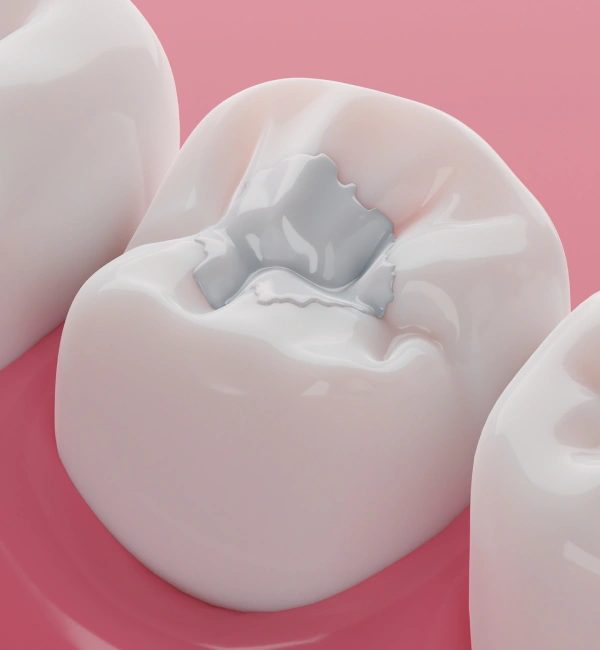
Repair Cavities with Tooth-Colored Fillings
Tooth decay does not stop on its own. Once a cavity breaks through the enamel, it spreads more quickly into the softer inner tooth, where it can eventually reach the nerve. Treating a small cavity early with a filling is simpler, more comfortable, and helps prevent the need for more extensive treatment later.
Tooth-colored composite fillings bond directly to the tooth, allowing our dentists to remove the decay while preserving more healthy tooth structure. They are also carefully matched to the color of your natural teeth, creating a strong, durable repair that blends seamlessly with your smile.
Schedule an Exam
What Are Tooth-Colored Fillings?
A tooth-colored filling, more precisely called a composite filling, is made from a resin material combined with fine glass or ceramic particles. It arrives as a putty-like paste, is placed directly into the prepared tooth in thin layers, and each layer is hardened with a curing light before the next goes in.
What distinguishes composite from older filling materials is how it attaches. Amalgam fillings were held in place mechanically, sitting inside a cavity shaped with undercuts to lock them in, which meant removing sound tooth structure purely to create that retention. Composite bonds chemically to both enamel and dentin, so the preparation only needs to remove what is actually decayed. Less drilling, more of your original tooth left intact, and a repair that is joined to the tooth rather than wedged into it.
Signs You May Have a Cavity
Many cavities produce no symptoms at all, which is why routine exams and imaging find most of them. When symptoms do appear, these are the ones worth mentioning to our team:
- Sensitivity to sweet foods and drinks, often the earliest noticeable sign
- Sensitivity or a sharp twinge with cold, and sometimes heat
- Discomfort when biting down on a particular tooth
- A visible dark spot, white chalky patch or hole in a tooth
- Food consistently catching in the same place between teeth
- A rough edge you can feel with your tongue that was not there before
- Floss shredding or catching in one specific spot
- A dull ache that comes and goes in one area
- Persistent bad taste around a particular tooth
Pain that is constant, severe, throbbing, or that wakes you at night is a different signal. That usually means decay has reached the nerve, and the treatment needed at that stage is not a filling. Call our office rather than waiting for your next scheduled visit.
Getting a Filling at Our Omaha Office
Most fillings are completed in a single appointment lasting somewhere between twenty minutes and an hour depending on size and location. Here is what happens.
Examination and imaging
Our dentist confirms the extent of the decay, using digital imaging where the cavity sits between teeth or below the surface. This determines whether a filling is the right treatment or whether the tooth needs more coverage.
Matching the shade
Done before treatment begins, while the tooth is still hydrated and its natural colour is accurate. Teeth dry out slightly during a procedure and appear lighter, so shade selected mid treatment tends to be off.
Numbing the tooth
Local anesthetic is administered and given time to take effect, then tested before work starts. Very small cavities in enamel only are occasionally treated without it, and our dentist will discuss that with you rather than deciding for you.
Removing the decay
The decayed structure is removed, and only that. Composite bonding means the preparation does not need to be extended into healthy tooth to create mechanical retention, so more of the original tooth stays.
Cleaning and preparing the surface
The area is cleaned, then conditioned with an etching gel and a bonding agent. These steps create the chemical connection between the composite and the tooth, and they are the reason the repair holds.
Placing the composite in layers
The material goes in thin increments, each cured with a light before the next is added. Layering matters for strength and for shrinkage control, and on visible teeth it also allows shade and translucency to be built up so the result looks natural rather than flat.
Shaping the filling
Our dentist contours the composite to reproduce the natural anatomy of the tooth, including the grooves on a biting surface and the contour where it meets the neighboring tooth. Getting that contact right is what prevents food packing into the space afterward.
Checking the bite
You bite down and move your jaw side to side while our dentist checks the contact with the opposing tooth. Any high spot is adjusted until the bite feels normal to you.
Polishing
The surface is polished smooth, which improves appearance and gives plaque less texture to hold onto.
Replacing Old Silver Fillings
Old silver (amalgam) fillings do not always need to be replaced. If a filling is intact, well-sealed, and not causing problems, replacing it may remove healthy tooth structure unnecessarily.
Over time, however, older fillings can wear down, develop leaking margins, or contribute to cracks in the surrounding tooth. Hidden decay may also form beneath the filling without obvious symptoms.
During your routine exams, our dentists carefully evaluate existing fillings and recommend replacement only when it is clinically necessary or if you prefer a more natural-looking, tooth-colored restoration.
Treat a Cavity While It Is Still Simple
If a tooth is sensitive to sweets or cold, if floss keeps catching in the same spot, or if it has been a while since anyone looked, an exam gives you a clear answer. Small cavities are one appointment and one filling. That is a very different proposition from what the same tooth needs a year later.
Request an appointment online or call our West Omaha office at 402-991-6965, and our team will find a time that works around your schedule.
Book Now