Dental Emergency? Call Us First

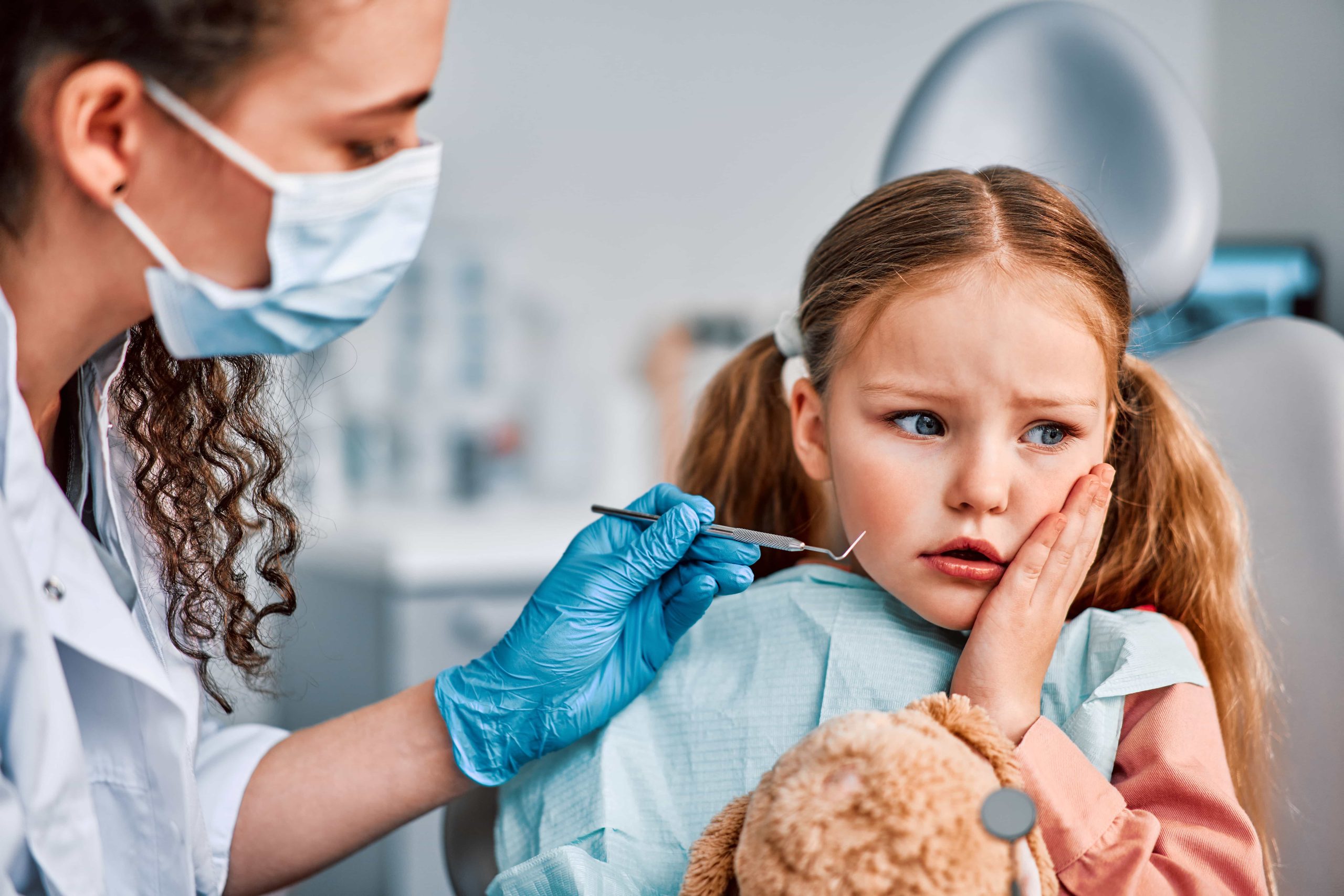
A tooth injury during a sports game needs prompt attention, even when the bleeding appears minor. If your child has lost a tooth, contact an emergency dentist to determine whether it is a baby tooth or a permanent tooth. Whispering Ridge Family Dentistry provides urgent dental care in Omaha. Parents can learn about available treatment through our emergency dentistry services in Omaha and call us for immediate guidance.
The distinction matters because a knocked-out baby tooth and a permanent tooth require different treatment. A permanent tooth may be saved through prompt reimplantation. A baby tooth should not be placed back into its socket.
How Can You Tell Whether Your Child Knocked Out a Baby Tooth or a Permanent Tooth?
Your child’s age, tooth position, and dental development help determine whether the missing tooth is primary or permanent.
Children usually begin losing baby teeth around age 6. The front lower and upper teeth are commonly among the first to fall out. Permanent teeth gradually replace primary teeth as children grow.
Use these general developmental patterns as a guide:
| Tooth type | Typical age or characteristic |
|---|---|
| Baby front teeth | Usually lost between ages 6 and 8 |
| Permanent first molars | Usually erupt around age 6 |
| Permanent front teeth | Commonly erupt between ages 6 and 9 |
| Permanent premolars | Commonly replace baby molars between ages 10 and 12 |
| Permanent second molars | Usually erupt between ages 11 and 13 |
These ages are approximate. Children develop at different rates.
A tooth that falls out during a sports injury may not be a naturally loose baby tooth. Trauma can dislodge either type of tooth. Never assume that a missing tooth is harmless because your child is young.
If you cannot identify the tooth, keep it moist and contact a dentist. A dental examination and X-ray can help establish whether the tooth was permanent, primary, or pushed into the gum.
Is a Knocked-Out Baby Tooth an Emergency?
A knocked-out baby tooth generally does not require reimplantation, but a dentist should assess the injury and surrounding tissues.
A primary tooth has a developing permanent successor underneath it. Replacing the baby tooth can damage that developing tooth. It can also create an aspiration risk.
If your child experiences a baby tooth knocked out with bleeding, follow these steps:
- Find the tooth if possible and keep it for identification.
- Place clean gauze over the bleeding area.
- Ask your child to apply gentle pressure by biting on the gauze.
- Use a cold compress against the outside of the cheek to reduce swelling.
- Avoid touching or probing the empty socket.
- Contact your dentist for an examination.
Do not push the tooth back into the gum. Do not use household adhesives or attempt to stabilize it yourself.
The dentist will examine the injured gum, check nearby teeth, and assess possible damage to the underlying permanent tooth. An X-ray may be necessary if the tooth cannot be located.
The American Academy of Pediatric Dentistry (AAPD), following International Association of Dental Traumatology guidelines, recommends that an avulsed primary tooth should not be replanted. Clinical follow-up may be recommended around 6–8 weeks after the injury.
What Should You Do If a Permanent Tooth Gets Knocked Out During Sports?
A completely knocked-out permanent tooth is a dental emergency that requires immediate attention to improve the possibility of saving it.
The cells on the tooth root help it reattach to the surrounding tissues. These cells can become damaged when the tooth dries out.
The American Association of Endodontists recommends seeking dental treatment within 30 minutes whenever possible. However, a tooth may still be treatable after a longer period.
Follow these first-aid steps:
- Find the tooth: Locate it immediately after the injury.
- Hold the crown: Pick it up by the white chewing surface. Never touch the root.
- Rinse gently: If dirty, briefly rinse with milk or saline. Do not scrub, scrape, or dry the tooth.
- Reinsert if appropriate: If it is clearly a permanent tooth and your child is conscious, cooperative, and able to follow instructions, gently attempt to place it back into the socket. Do not force it.
- Keep it moist: If reinsertion is not possible, place the tooth in milk or a suitable tooth-preservation solution.
- Seek immediate care: Contact a dentist and explain that your child has experienced a permanent tooth avulsion.
Do not store the tooth in tap water. Avoid wrapping it in tissue or allowing it to dry.
The 2024 American Heart Association and American Red Cross first-aid guidelines also recommend immediate management of permanent tooth avulsion and advise against storing the tooth in tap water. cpr.heart.org
When Does a Sports-Related Tooth Injury Require Immediate Dental Care?
A knocked-out permanent tooth, uncontrolled bleeding, severe pain, or significant facial injury requires immediate professional assessment.
Not every sports-related dental injury involves complete tooth loss. A tooth may become loose, displaced, fractured, or pushed into the gum.
Watch for these warning signs:
- Loose tooth: The tooth moves when your child bites or touches it.
- Displaced tooth: The tooth appears longer, shorter, or out of its normal position.
- Broken tooth: A visible fracture exposes a deeper layer of the tooth.
- Persistent bleeding: The gum continues bleeding despite gentle pressure.
- Swelling: The gum, lip, or cheek becomes increasingly swollen.
- Severe pain: Your child experiences persistent pain when biting or closing the mouth.
A tooth pushed into the gum can also indicate an intrusion injury. It may look shorter or disappear partially beneath the gumline.
Seek emergency medical care if your child has difficulty breathing or swallowing, suspected jaw fracture, significant head injury, loss of consciousness, or uncontrolled bleeding. These symptoms require medical evaluation rather than dental treatment alone.
What Will an Emergency Dentist Do for a Child With a Knocked-Out Tooth?
An emergency dentist examines the injured area, identifies the type of tooth, and determines the appropriate treatment based on the damage.
The treatment depends on whether the injury involves a baby tooth or permanent tooth.
For a permanent tooth, treatment may involve:
- Repositioning the tooth into its socket.
- Stabilizing it with a flexible dental splint.
- Taking dental X-rays to assess the root and surrounding bone.
- Monitoring the tooth for pulp damage and signs of infection.
The International Association of Dental Traumatology recommends flexible splinting for approximately two weeks in many uncomplicated permanent-tooth avulsion cases. The dentist may adjust the treatment according to the injury.
For a baby tooth, the dentist generally avoids reimplantation. Treatment focuses on bleeding control, soft-tissue examination, and monitoring the developing permanent tooth.
Follow-up appointments are important because a traumatized permanent tooth can develop pulp necrosis, infection, or root resorption. A tooth that initially appears stable may still require monitoring.
How Can Parents Prevent Tooth Injuries During Sports?
A properly fitted sports mouthguard reduces the risk of dental injuries during activities involving physical contact or moving equipment.
Sports such as basketball, soccer, football, baseball, and hockey can expose children to impacts involving the mouth and face.
Parents can reduce injury risk by taking these precautions:
- Provide a properly fitted mouthguard for contact sports.
- Replace damaged or poorly fitting mouthguards.
- Make sure helmets and face protection meet the sport’s safety requirements.
- Encourage children to follow playing rules and avoid dangerous contact.
- Schedule regular dental examinations to identify existing dental problems.
A mouthguard should cover the teeth comfortably without interfering with breathing or speaking. A dentist can assess whether a custom-fitted mouthguard is appropriate for your child’s dental development.
Where Can You Find an Emergency Dentist Near Me in Omaha, NE?
Whispering Ridge Family Dentistry provides emergency dental care in West Omaha for patients experiencing urgent dental problems.
If your child has a knocked-out tooth after playing sports, call the office. Describe the injury, your child’s symptoms, and whether the tooth appears to be permanent or primary.
The dental team can provide instructions while arranging the appropriate appointment. New patients are also welcome.
For urgent dental concerns, calling directly is preferable to waiting for an online appointment request.
You can also find the practice through its Google Business Profile and location on Google Maps.
FAQs
1. Should I take my child to the dentist if a baby tooth gets knocked out?
Yes. A dentist should examine the injury to check for gum damage, nearby tooth injuries, and possible effects on the developing permanent tooth.
2. Can a knocked-out permanent tooth grow back?
No. A permanent tooth does not naturally grow back, but a dentist may be able to reimplant and stabilize it if treatment is provided promptly.
3. How long do I have to save my child’s knocked-out permanent tooth?
Seek treatment immediately, ideally within 30 minutes, because the chances of successful reimplantation decrease as the tooth remains dry.
4. What should I do if my child breaks a tooth during sports?
Rinse the mouth gently, save any broken tooth fragments, apply a cold compress, and contact a dentist promptly for an examination.
5. Does my child need an emergency dentist if the knocked-out tooth stops bleeding?
Yes. Stopped bleeding does not rule out damage to the surrounding gum, bone, or developing permanent tooth, so a dental assessment is still necessary.