Dental Emergency? Call Us First
Correcting Small Flaws in a Single Visit
Not every cosmetic concern calls for a significant procedure. A chip on a front tooth, a gap slightly wider than you would like, an edge that has worn unevenly, a tooth that sits a fraction shorter than its neighbor: these are small things, but they are the kind of small things people notice in their own photographs for years.
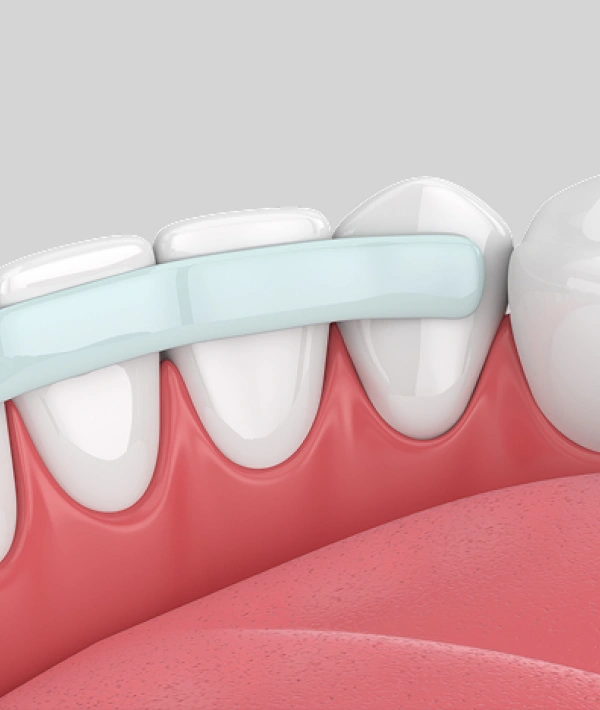
Dental bonding handles them directly. Our dentist applies tooth-colored composite to the surface, shapes it by hand to correct the flaw, hardens it with a curing light and polishes it smooth. The composite is matched to the shade and translucency of your surrounding teeth, so the result blends rather than announcing itself. Most cases are finished in one appointment lasting under an hour.
Our dentists at Whispering Ridge Family Dentistry use bonding both cosmetically and restoratively, since the same material that repairs a chip also fills a cavity and rebuilds a worn area along the gumline.
Schedule a Consultation
What Is Dental Bonding?
Dental bonding is the application of composite resin directly onto a tooth to change its shape, size, colour or surface. The material is the same composite used for tooth-colored fillings, and the difference lies in how it is used: shaped freehand by our dentist while it is soft, then hardened in place.
The process is direct, meaning everything happens in your mouth in one sitting. Nothing is sent to a laboratory, no impression is needed and no temporary is worn. Our dentist lightly conditions the tooth surface so the composite grips it, applies the material in layers, sculpts the contour and edge by hand, cures each layer with a light, then shapes and polishes the finished result.
Because it is sculpted rather than fabricated, the outcome depends heavily on the skill and eye of the person doing it. Getting a bonded edge to look natural means reproducing the subtle translucency at the tip of a tooth, the slight variation in shade from gumline to edge, and the small irregularities that make real teeth read as real. That is craft rather than technique, and it is why bonding results vary between practitioners in a way that lab fabricated restorations do not.
What Bonding Can Correct
Bonding works well for a defined set of problems, and it is worth being clear about which:
- Chipped or fractured edges
particularly on front teeth, where the missing corner is rebuilt to match the original contour - Small gaps between teeth
where composite added to the adjacent surfaces narrows the space without moving the teeth - Teeth that appear too short
where a little length is added to bring an edge into line with its neighbors - Uneven or worn edges
often from grinding, where the biting edge is reshaped and rebuilt - Slightly misshapen teeth
where contour is refined to a more regular form - Discoloured spots and stains
that whitening cannot address, particularly white spot lesions and areas of internal discolouration - Exposed root surfaces
from gum recession, where composite covers a sensitive area and protects it from decay - Small cavities
where bonding is simply the restorative use of the same material
How Bonding Is Done at Our Omaha Office
Most bonding appointments run twenty minutes to an hour depending on how many teeth are involved.
Examination and discussion
Our dentist examines the tooth, checks that the enamel is sound and confirms bonding is the right approach. This is also the conversation about what is realistically achievable, since it is better to establish expectations before treatment than to adjust them afterward.
Shade selection
Done first, while the tooth is still hydrated and its true colour is accurate. Teeth dry out slightly during treatment and appear lighter than they are, so shade chosen mid procedure tends to be wrong. Natural teeth are rarely one flat colour, so this involves matching depth and variation rather than picking a single swatch.
Preparing the surface
Usually no drilling is involved. The surface is cleaned and lightly conditioned with an etching gel, which creates microscopic texture for the composite to grip. Anesthetic is generally unnecessary for purely cosmetic bonding, and our dentist will discuss it if the situation is different, such as bonding over an exposed root surface.
Applying the bonding agent
A thin adhesive layer is applied and cured, establishing the chemical connection between tooth and composite.
Sculpting the composite
The material is placed in layers and shaped by hand. Our dentist builds the contour, the edge and the surface character, curing each layer before adding the next. Layering is what allows shade and translucency to be varied through the thickness, which is what makes a bonded edge look like enamel rather than a flat patch.
Refining the shape
Once cured, the composite is trimmed and contoured with fine instruments to perfect the outline, the edge and the way light catches the surface. You will be shown the result and asked whether it looks right to you.
Checking the bite
You bite down and move your jaw side to side so our dentist can check that the bonded surface is not taking excess force. This matters especially on biting edges, since a bonded edge that catches will chip.
Polishing
The surface is polished to a natural lustre, which both improves appearance and reduces the texture that would otherwise attract stain.
You can eat and drink normally as soon as you leave, since the composite is fully hardened. Avoiding coffee, tea, red wine and other strongly staining items for the first day or two is sensible while the surface fully settles.
How Long Bonding Lasts
Bonded composite typically lasts somewhere between four and eight years, and plenty of cases run longer. That range is wide because the variables genuinely matter.
Location is the biggest factor. Composite added to a biting edge takes force with every meal and lasts less time than composite covering a gumline area or filling a gap between teeth. Grinding shortens the lifespan of any bonded edge substantially, and patients who clench should expect to protect it with a nightguard or accept more frequent repairs.
Habits account for much of the rest. Fingernails, ice, pens and hard crusts all deliver point loads that composite tolerates less well than enamel does. Smoking accelerates staining considerably.
When bonding does reach the end of its life, the usual outcomes are a chipped edge or gradual staining rather than sudden failure. Both are addressed by adding to or replacing the composite, and because bonding generally removes nothing from the tooth, the tooth underneath remains available for whatever option makes sense at that point. Patients who repeatedly fracture bonded edges often move to veneers eventually, and nothing about having had bonding first makes that harder.
Fix That Chipped Tooth in One Appointment
If a chip, a gap or an uneven edge has been bothering you, bonding is usually the shortest path to sorting it. Our dentists will look at the tooth, tell you what bonding can realistically achieve and whether something else would serve you better, and in most cases the treatment itself is done the same day.
Request an appointment online or call our West Omaha office at 402-991-6965, and our team will find a time that suits your schedule.
Book Now