Dental Emergency? Call Us First
Closing Off the Grooves Where Cavities Begin
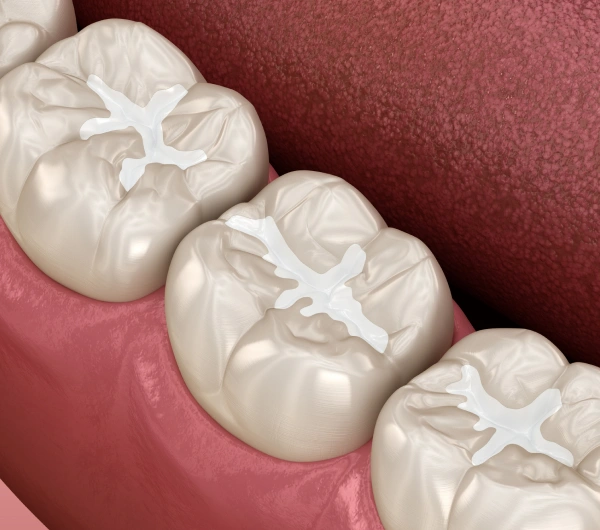
Look closely at a molar and you will see a pattern of pits and fissures across the biting surface. Those grooves are part of normal tooth anatomy, and on some teeth they run deeper and narrower than a single toothbrush bristle can reach. Food debris and bacteria settle into them and stay, which is why the overwhelming majority of childhood cavities form on chewing surfaces rather than anywhere else in the mouth.
Sealants solve that problem by filling the grooves with a thin protective resin, turning a textured surface that traps debris into a smooth one that brushing can actually clean. No drilling is involved, no anesthetic is needed and nothing is removed from the tooth. For a child who has just erupted a set of permanent molars, it is one of the most effective preventive measures available.
Our dentists at Whispering Ridge Family Dentistry apply sealants during routine visits, typically as soon as permanent molars come in around ages six and twelve. Adults with deep grooves and a history of decay benefit as well, which surprises many patients who assume sealants are only for children.
Schedule a Preventive Visit
What Are Dental Sealants?
A dental sealant is a thin coating of tooth colored or clear resin painted onto the chewing surface of a back tooth and hardened with a curing light. Once set, it bonds to the enamel and forms a physical barrier across the pits and fissures.
The material sits on the surface rather than inside the tooth. Nothing is drilled, no healthy structure is removed and the tooth underneath is unchanged. If a sealant wears down or chips over the years, it is simply reapplied.
Sealants are preventive rather than restorative, which is the distinction that matters most. They are placed on healthy teeth to keep decay from starting. A tooth that already has a cavity needs a filling instead, because sealing over active decay traps it beneath the surface where it continues to spread out of sight.
Why Sealants Are Worth Placing Early
- They protect the teeth most likely to decay
Research consistently shows sealants prevent the large majority of cavities on treated chewing surfaces in the years immediately after placement, which is precisely the window when newly erupted molars are most vulnerable. - Application is genuinely easy
No needle, no drill, no numbness and no discomfort. For a nervous child, this is often the first dental procedure they experience, and it goes well. That matters for how they feel about the next visit. - They protect enamel that never grows back
A sealed tooth that stays cavity free avoids its first filling, and a tooth that never needs a filling never enters the cycle of replacement restorations that follows across a lifetime. - Newly erupted molars need the help most
Enamel continues hardening for a period after a tooth erupts, so freshly emerged permanent molars are more susceptible to decay than the same teeth will be a few years later. Sealing during that window covers the highest risk period. - They reach where brushing cannot
Even excellent brushing does not clear a fissure narrower than the bristle attempting to enter it. Sealants address a limitation of anatomy rather than a limitation of effort. - Most dental plans cover them for children
Coverage for sealants on permanent molars is common under preventive benefits, often for patients up to a specified age. Our team verifies the details before treatment.
How Sealants Are Applied at Our Omaha Office
Start to finish, sealing a single tooth takes only a few minutes, and a full set of molars is comfortably completed within one appointment. Most children have sealants placed during the same visit as their cleaning. There is no numbness, no waiting period and no aftercare instructions beyond normal brushing. Patients eat and drink as usual straight afterward.
Examining the tooth first
Our dentist checks the chewing surface carefully to confirm there is no existing decay. This step matters, because sealing over a cavity would hide it while it continues to progress. Digital images help where a groove is stained and it is not obvious visually whether decay has begun.
Cleaning the surface
The tooth is cleaned thoroughly, since the resin bonds to enamel rather than to debris. Any plaque or food packed into the grooves is cleared out first.
Drying and isolating the tooth
The tooth is dried and kept away from saliva during the next few steps. Moisture is the main reason a sealant fails to bond properly, so this is done carefully.
Conditioning the enamel
A mild etching gel is applied for a short period, then rinsed away. This gives the enamel surface a slightly rougher texture at a microscopic level so the resin grips it securely. It is painless and involves no removal of tooth structure.
Applying the sealant
The liquid resin is painted into the grooves with a small brush, flowing down into the fissures the way water follows a channel.
Curing with light
A curing light hardens the material within seconds. Nothing is felt beyond the light being held near the tooth.
Checking the bite
Our dentist has the patient bite down and checks that the sealant sits flush with the natural chewing surface. Any high spot is adjusted so the bite feels normal, which it does almost immediately.
Who Should Consider Dental Sealants?
- Children with newly erupted permanent molars
The first permanent molars typically arrive around age six and the second set around age twelve. Sealing them soon after they fully emerge is the standard recommendation and the most common reason sealants are placed. - Children with deep, narrow grooves
Groove depth varies considerably between individuals. Our dentists can see during an exam whether a particular child's molars have the kind of anatomy that traps debris. - Children with a history of cavities
A child who has already had decay is at elevated risk for more, and sealing the remaining unaffected chewing surfaces is a sensible protective step. - Teenagers
Molars sealed at six may need resealing, and the second molars arriving around twelve are frequently missed. Orthodontic treatment also makes thorough cleaning harder, which raises risk during those years. - Adults with deep grooves and no decay in those teeth
Sealants are not exclusive to children. Adults with unrestored molars, deep fissures and a history of decay are reasonable candidates, and so are patients dealing with dry mouth from medication, which sharply increases cavity risk at any age. - Patients with limited ability to brush thoroughly
Physical or developmental conditions that make detailed brushing difficult make preventive barriers more valuable.
Protect Your Child's Molars Before Decay Starts
Sealants take minutes, involve no discomfort and prevent the cavities most likely to form during childhood and the teenage years. If your child has permanent molars coming in, or if you are an adult with deep grooves and a history of decay, this is a small step with a long payoff.
Request an appointment online or call our West Omaha office at 402-991-6965 and our dentists will let you know whether sealants make sense at your next visit.
Book Now